Siege of Tsingtao
Prelude to Battle
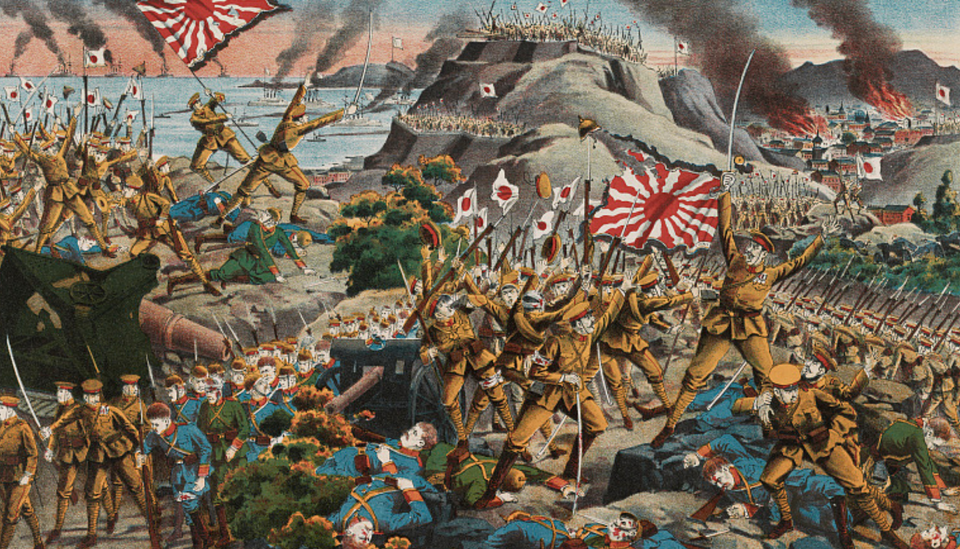
The Siege of Tsingtao, fought from late October to November 7, 1914, was one of the earliest and most unusual engagements of the First World War. While the eyes of Europe were fixed on the trenches of the Western Front, a very different struggle unfolded on the far side of the world—one that would pit Imperial Japan, supported by soldiers from the British Empire, against a German colonial garrison in China.
At the dawn of the 20th century, the German Empire sought global prestige through overseas expansion. One of its prized possessions was the fortified port of Tsingtao (Qingdao), leased from China in the Shandong Peninsula. The city boasted modern docks, railways, coastal guns, and formidable defenses centered around the Kiautschou Bay concession. Kaiser Wilhelm II proudly considered it the “model colony” of his empire.
When war erupted in Europe in August 1914, Japan seized the opportunity to expand its influence in Asia. Bound to Britain by an alliance treaty, Japan declared war on Germany and quickly moved to eliminate German strongholds in the Pacific. Tsingtao became their primary target, both for strategic reasons and national prestige.
The German governor, Captain Alfred Meyer-Waldeck, understood the enormous odds against him. His small garrison—isolated, outnumbered, and cut off from reinforcements—prepared to withstand a siege from one of the most modern armies in Asia. Meyer-Waldeck hoped to delay the inevitable as long as possible and inflict enough casualties to honor imperial pride.
The people of Tsingtao watched anxiously as Japanese warships blockaded the bay and soldiers poured into the surrounding hills. Far from the muddy fields of Europe, a new front in the global war was about to open—one that would end Germany’s colonial presence in Asia and reveal Japan’s rising military power.