Battle of Yorktown
Prelude to Battle
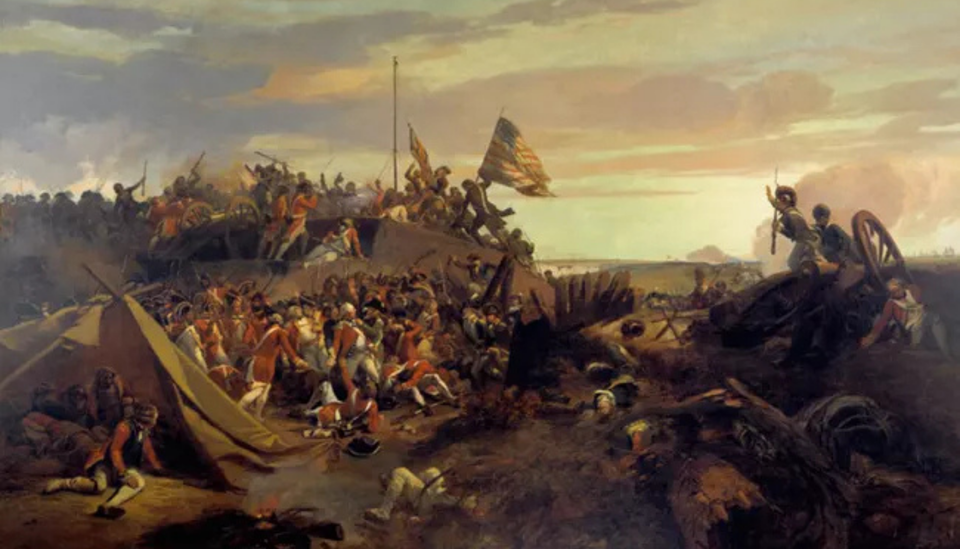
The Battle of Yorktown, fought in the autumn of 1781 along the shores of the York River in Virginia, marked one of the most pivotal turning points of the American Revolutionary War. After years of brutal fighting up and down the eastern seaboard, British General Charles Cornwallis sought to consolidate control in the South, hoping to break the American rebellion by cutting off key states and rallying Loyalist support. Following a string of campaigns through the Carolinas, Cornwallis moved his army into Virginia, believing the region offered better supply lines, naval protection, and a chance to strike a decisive blow.
But General George Washington and the Continental Army, long frustrated by shortages, setbacks, and British firepower, saw an opportunity. Learning that Cornwallis had entrenched himself at Yorktown—positioned between the York River and Chesapeake Bay—Washington realized that if he could combine forces with the French army under General Rochambeau and bring in the powerful French fleet under Admiral de Grasse, the British could be trapped. For Washington, who had waited years for a moment of overwhelming advantage, Yorktown offered the possibility of ending the war itself.
The political atmosphere crackled with anticipation. In Philadelphia and Paris, diplomats and ministers waited anxiously for news that could decide the fate of nations. The American cause desperately needed a victory that would justify continued French support and prove to the world that independence was not merely a dream but a tangible reality. Yorktown held the potential to shatter Britain’s confidence and reshape global politics.