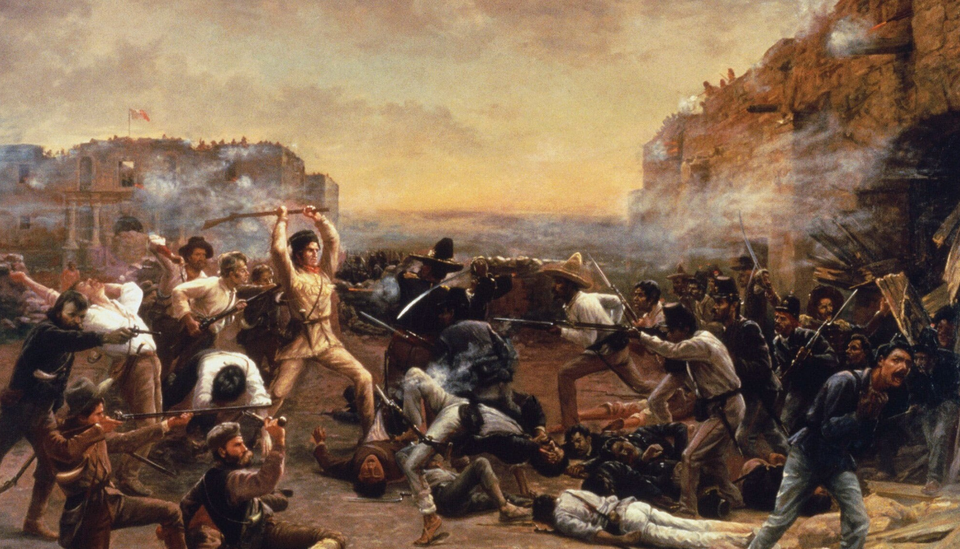
Battle of the Alamo
Prelude to Battle
The Battle of the Alamo, fought from February 23 to March 6, 1836, was a pivotal moment in the Texas Revolution, a war for independence from Mexico that helped shape the future of the American Southwest. The conflict grew out of tensions between Mexico’s central government, led by President General Antonio López de Santa Anna, and settlers in Texas, many of whom were American immigrants who had moved into the region seeking land and opportunity.
By the early 1830s, Texas was part of Mexico, but its settlers, both native Mexicans and immigrant Anglo-Americans, increasingly chafed under Mexican rule. Mexico’s centralist policies, which restricted local governance and revoked the rights granted by the Mexican Constitution of 1824, led to unrest. As a result, Texas declared its independence from Mexico in 1835, and a full-scale rebellion ensued. Santa Anna, determined to suppress the revolt, marched north with a large army to crush the insurgents.
The Alamo, a former Franciscan mission in San Antonio de Béxar, became a symbol of Texan defiance. A small group of Texan defenders, vastly outnumbered, fortified the mission and prepared to resist the oncoming Mexican forces. The defenders, led by Colonel James Bowie, Lieutenant Colonel William B. Travis, and legendary frontiersman David Crockett, knew they were facing impossible odds but hoped to buy time for the larger Texan army to organize. The battle that followed would become one of the most famous and tragic episodes in the struggle for Texas independence.