Battle of Stalingrad
Prelude to Battle
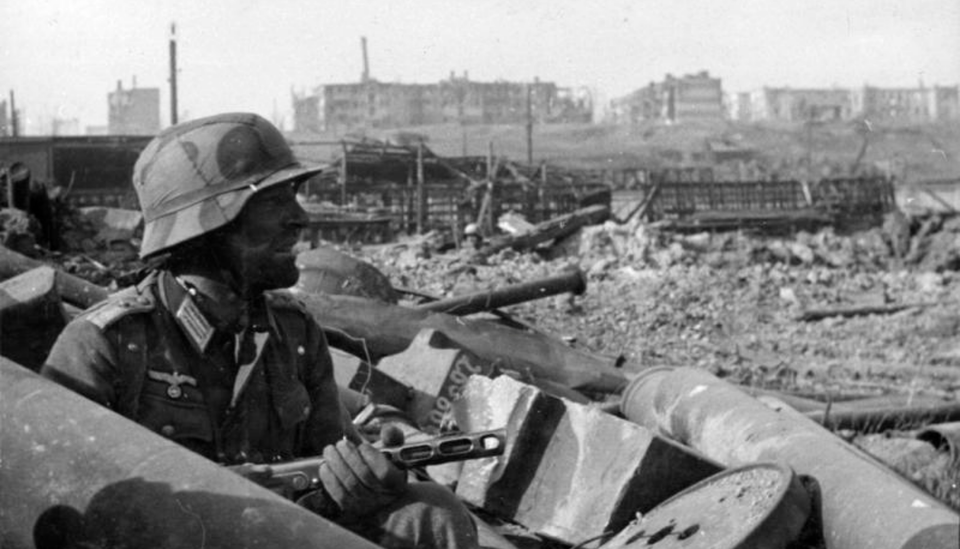
The Battle of Stalingrad, fought between August 1942 and February 1943, was one of the most ferocious and consequential engagements of the Second World War. After sweeping triumphs across Eastern Europe, the German Wehrmacht sought to crush Soviet resistance once and for all by seizing control of the Volga River and cutting the Soviet Union’s lifeline to the industrial centers of the south. Adolf Hitler viewed Stalingrad not just as a strategic objective but as a symbolic prize—bearing the name of Joseph Stalin, the Soviet leader he despised. Its capture would, he believed, humiliate the Soviet regime and shatter its will to fight.
For the Soviet Union, the stakes could not have been higher. After catastrophic losses in 1941 and early 1942, the Red Army was struggling to regroup, reform, and reclaim initiative. Stalingrad was a vital industrial center, producing armaments and machinery essential to the Soviet war effort. Positioned along the Volga, it served as a major artery for transporting grain, oil, and supplies from the south. Losing the city would slice the Soviet Union in half and place the Caucasus oil fields at peril.
The political climate was electrified with urgency. Stalin issued Order No. 227—“Not one step back!”—signaling that Stalingrad must be held at any cost. Civilians were conscripted into labor battalions, factories were transformed into fortresses, and the city braced for the storm. Meanwhile, in Berlin, Hitler declared that Stalingrad would fall quickly; his generals were less certain. This clash of wills, combined with massive armies converging on a single point, set the stage for one of history’s bloodiest confrontations.