Battle of Poitiers
Prelude to Battle
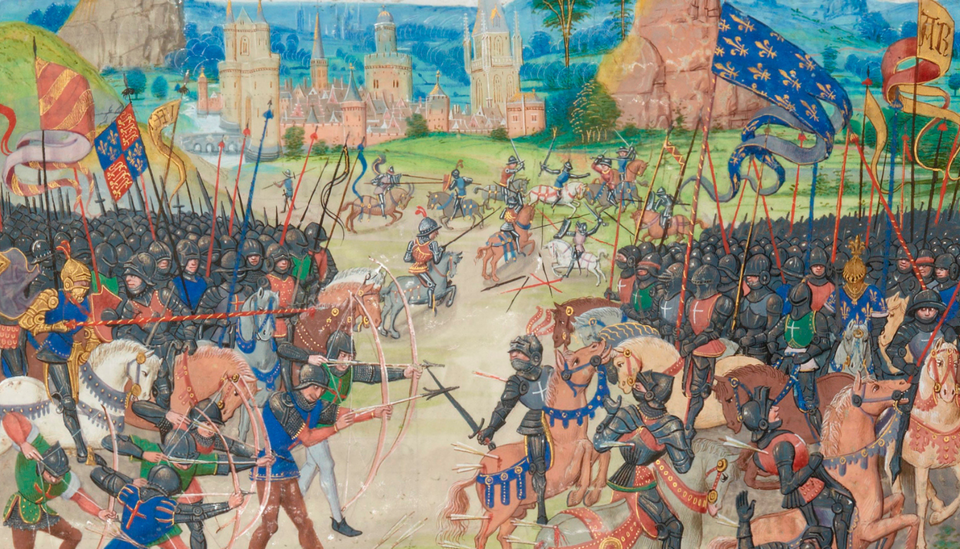
The Battle of Poitiers, fought on September 19, 1356, emerged from the chaos and devastation of the Hundred Years’ War, a conflict that had already dragged on for two decades and reshaped the balance of power in medieval Europe. The war—rooted in dynastic claims, territorial disputes, and fierce national rivalries—pitted England’s Plantagenet kings against France’s Valois dynasty in a struggle for dominance over the French crown and its vast lands.
By the mid-14th century, France had suffered a series of humiliating defeats. The English victory at Crécy in 1346 shattered the myth of French military supremacy and introduced Europe to the deadly effectiveness of the English longbow. The Black Death ravaged France soon after, leaving fields barren, coffers empty, and morale shaken. Yet King John II of France, proud and determined, sought redemption through decisive action.
Across the Channel, Edward the Black Prince—son of King Edward III—had risen as one of Europe’s most formidable commanders. In 1356, he launched a chevauchée, a massive mounted raid through southwestern France designed to cripple the countryside, weaken French authority, and force the French king into battle. His lightly supplied but fast-moving army burned towns, seized provisions, and spread panic across the region.
King John responded swiftly. Rallying nobles, vassals, and mercenaries, he assembled a force that dwarfed the Black Prince’s army and moved to cut off his retreat. What began as a daring English raid now transformed into a desperate attempt to escape annihilation.
As the English army withdrew toward Poitiers, exhausted and burdened with plunder, the French army closed in. Negotiations flickered briefly but collapsed under the weight of pride, pressure, and mistrust. Both sides prepared for the bloody confrontation that would reshape the course of the Hundred Years’ War.