Battle of Crécy
Prelude to Battle
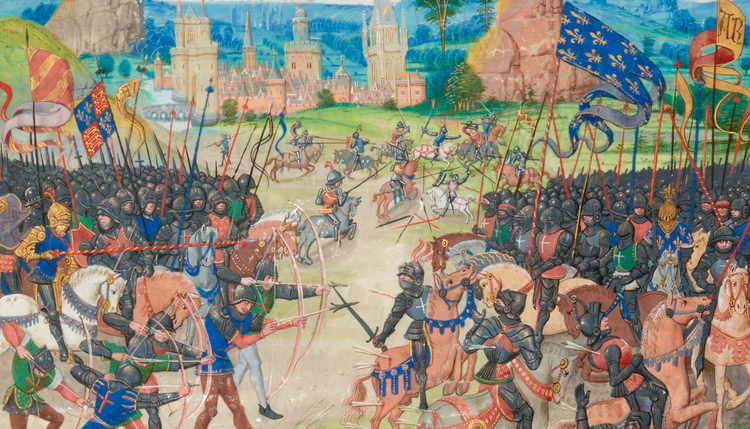
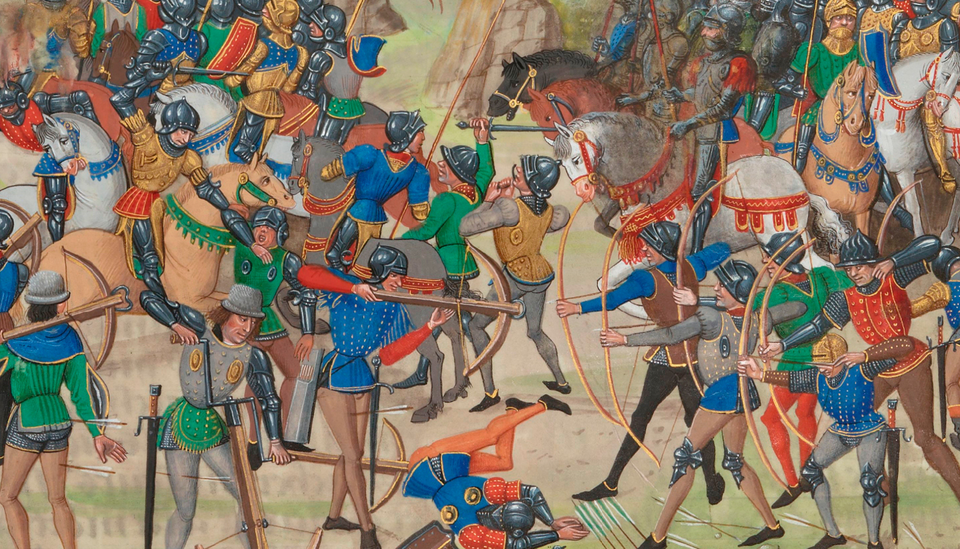
The Battle of Crécy, fought on August 26, 1346, was a decisive engagement during the early stages of the Hundred Years' War, a protracted conflict between England and France that lasted from 1337 to 1453. The battle not only highlighted the tactical superiority of the English but also marked a turning point in medieval warfare, showcasing the effectiveness of longbowmen and disciplined infantry over traditional mounted knights.
By the mid-14th century, the English and French monarchies were locked in a fierce struggle for dominance over France. Edward III of England had laid claim to the French throne through his maternal line, sparking conflict with the reigning French king, Philip VI. The war had already seen several skirmishes, but Edward’s 1346 campaign was particularly ambitious. He sought to establish a foothold in northern France by launching a bold invasion, landing at Normandy with around 15,000 troops. After weeks of pillaging and marching toward Paris, Edward found himself pursued by a larger French force, leading to a critical decision: to make a stand at Crécy, a small village in northern France.
This engagement would prove to be one of the most significant battles of the Hundred Years' War, with far-reaching consequences for both kingdoms.