Battle of Antietam
Prelude to Battle
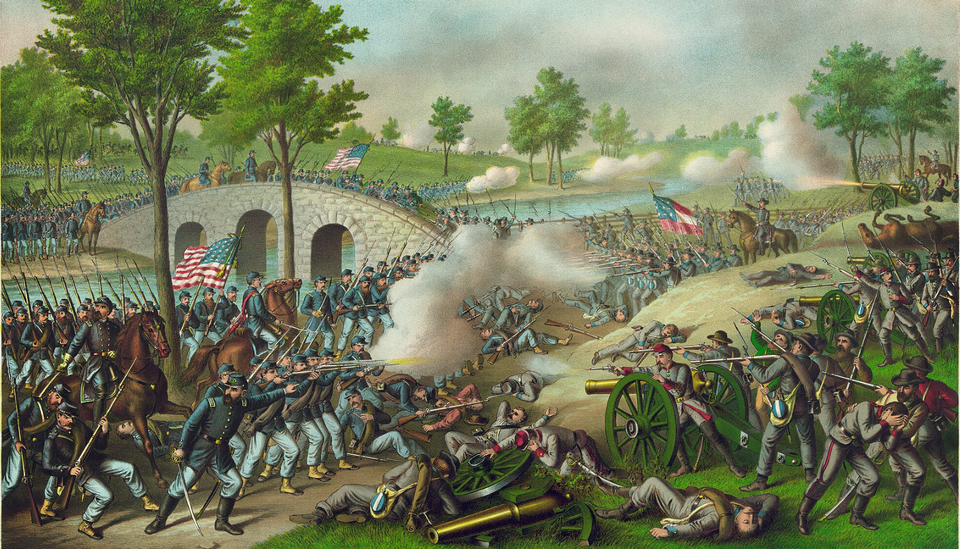
The Battle of Antietam, fought on September 17, 1862, near Sharpsburg, Maryland, was a pivotal moment in the American Civil War. Following a series of Confederate victories, General Robert E. Lee decided to take the war to the North, hoping to secure a decisive victory on Union soil that would sway European powers to recognize the Confederacy and provide much-needed support. The Confederate Army of Northern Virginia crossed the Potomac River, advancing into Maryland, where Lee aimed to disrupt Union communications, gather supplies, and recruit Marylanders to his cause.
For the Union, the stakes were equally high. President Abraham Lincoln was under immense pressure to demonstrate the effectiveness of the Union war effort. General George B. McClellan, commanding the Army of the Potomac, was tasked with stopping Lee’s invasion. Known for his cautious nature, McClellan faced criticism for his inability to capitalize on opportunities to defeat Confederate forces in earlier engagements. Antietam offered him a chance for redemption.
The political atmosphere was charged. Lincoln awaited a significant Union victory to issue the Emancipation Proclamation, which would redefine the war’s purpose by making the abolition of slavery a central objective. The outcome of the battle would not only influence military strategies but also shape the nation's future.